A robot’s sustainability case starts with one figure: the energy used for each completed task. That number connects automation to the work you care about, whether it moves a pallet, sorts a parcel, or checks stock.
Quick read:
- Robots can cut empty travel, idling, and repeated handling when the task stays predictable.
- The result depends on electricity, battery life, repairs, and how often the robot works.
- Measure energy per task and total system cost before buying hardware.
Where robots can reduce waste
Logistics creates waste through motion. A vehicle drives back empty, a conveyor runs between orders, or a worker walks across a large site to find one item. A mobile robot can use route planning to send work to the nearest available unit, which may reduce travel when the software has good stock and order data.
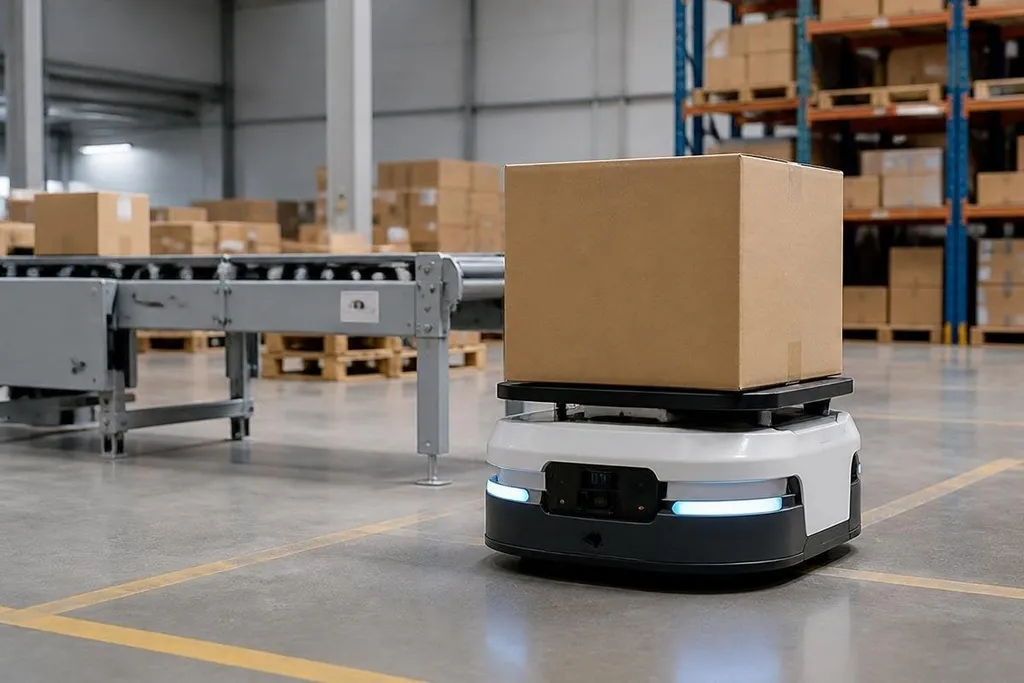
The same idea applies to warehouses. An autonomous mobile robot, or AMR, carries shelves or bins to a person at a picking station. Fewer walking trips can cut building traffic and leave more time for order work, but the robot still consumes electricity and needs space to charge.
Sorting systems can also reduce repeated handling. A robotic arm with a camera can read an item’s position, pick it, and place it into the next container. The gain depends on the full line: a fast arm does little if parcels wait beside it or if another machine sends items back for a second scan.
A robot’s power draw is only one line on a logistics bill. Robot24.com reports can place that figure beside conveyor runtime, scan delays, and vehicle fuel use, so you can judge whether a claimed saving comes from the robot or from a wider change in the line.
The energy bill moves upstream
Electric robots have no exhaust pipe inside a warehouse, but their power still comes from somewhere. A site using electricity from a low-carbon grid will count emissions differently from one running on diesel generators or a carbon-heavy power supply.
Battery charging adds another question. A robot that stops often may need spare batteries, more charging hardware, or longer operating hours. Those parts use materials and add maintenance work, so the energy-per-task figure should include charging losses rather than only the battery rating.
Software matters too. Poor routes create extra distance, and poor scheduling leaves machines waiting with their systems powered on. A useful review should record distance moved, idle time, charging time, completed tasks, and failed handoffs across the same work period.
Hardware has a working life
Manufacturing a robot uses metals, electronics, motors, sensors, and batteries. A system that runs for years and replaces several short-lived machines may have a better material case than one that needs frequent replacement, even if both use similar power during a shift.
Repair access changes that result. Replaceable motors, standard fasteners, published service steps, and battery packs that can be changed without discarding the whole unit keep equipment in use longer. Ask the maker how it handles worn wheels, gripper pads, cameras, and battery packs before you count any savings.
Automation can also shift work rather than remove it. People may spend less time walking and more time charging, clearing blocked routes, checking faults, or moving items that the robot cannot handle. Those tasks belong in the system review because extra handling can erase part of the energy gain.
Measure the whole logistics task
A clean comparison uses the same task, load, distance, and work period for the manual and automated versions. It also counts the support equipment, software, charging, building changes, and service visits needed to keep the robot running.
Use these checks before making a purchase:
- Set the task boundary: Count energy from charging through the completed delivery, not only motor use.
- Record useful output: Measure parcels, pallets, or picks completed rather than hours switched on.
- Check empty travel: Separate loaded distance from trips that carry nothing.
- Count support loads: Add chargers, conveyors, lifts, computers, and replacement batteries.
- Test failure work: Record the human time and extra travel caused by blocked routes or missed picks.
- Ask about repair: Get the battery warranty, spare-parts list, and expected service life in writing.
What happens next
The strongest use cases will be narrow ones with repeatable routes, steady demand, and clear energy records. I’d back a robot when its power, repair, and support costs are measured against each completed task, not when a product sheet points to automation alone.
The next useful result is a site report with energy per task, empty travel, repair time, and robot service life. Without those four figures, the sustainability claim is still a plan.